Pencil grip is a basic skill that affects how easily a child colors and, later, writes. Many parents notice their child holding a crayon in a full fist or in an unusual way and wonder if that is normal. Grip develops through natural stages, and knowing them helps you support your child at the right time without worry or pressure. Here we explain the stages, the comfortable grip and simple finger-strengthening exercises.
How pencil grip develops
Grip develops as the hand and shoulder muscles grow. These ages are approximate:
- 1 to 2 years: fist grip. The whole hand holds the crayon and movement comes from the shoulder.
- 2 to 3 years: fingers pointing down. Fingers point toward the paper and movement comes from the elbow and wrist.
- 3 to 4 years: early four or three finger grip. Fingertips are used, but the grip is not yet stable.
- 4 to 6 years: tripod grip. The pencil sits between thumb and index finger, resting on the middle finger, and movement comes from the fingers.
What is a good grip?
The most common comfortable grip is the tripod grip: thumb and index finger hold the pencil, it rests on the side of the middle finger, and the other fingers curl gently into the palm. Some children use a four-finger grip and write comfortably, which is fine. What matters is comfort without pain.
Signs to watch
After age five, watch for very strong pressure, quick tiredness or hand pain, the thumb wrapped fully over the pencil, or constant hand switching. One sign alone is not a problem, but if several persist, ask an occupational therapist.
Fun finger-strengthening exercises
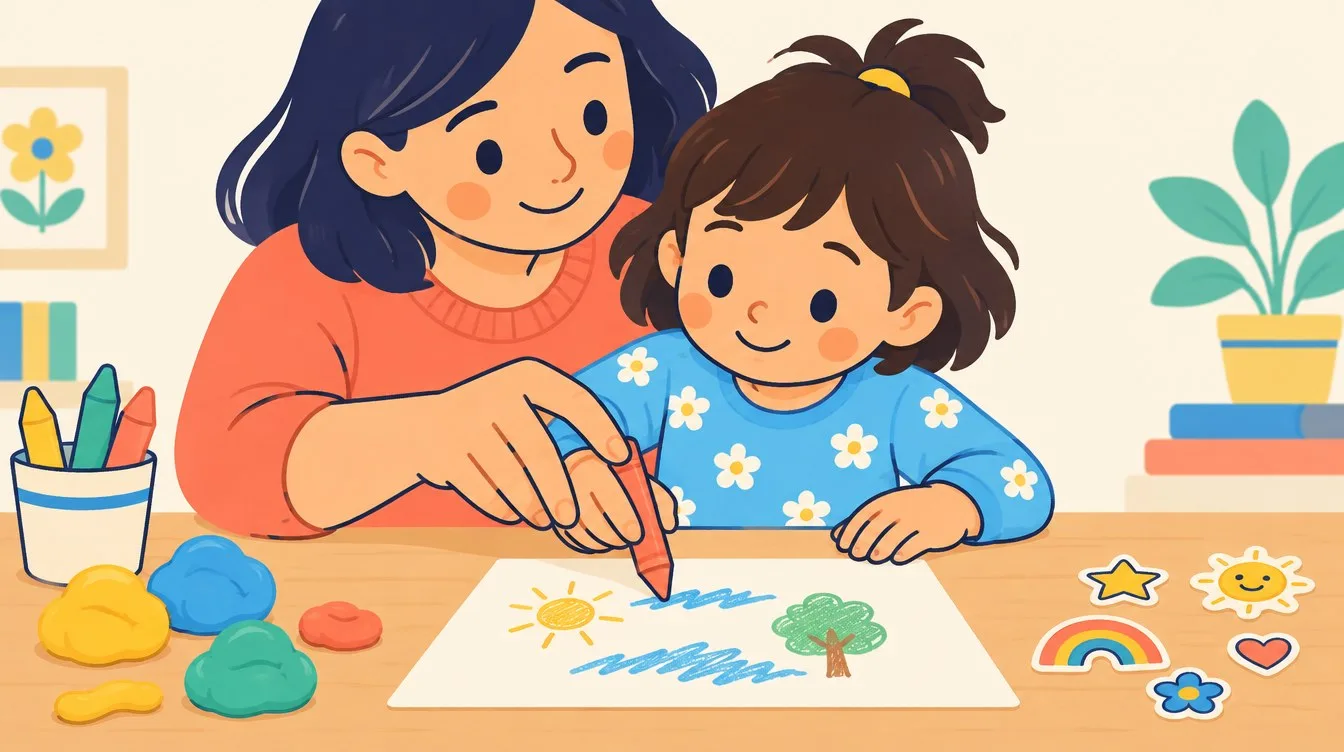
- Playdough: squeezing and rolling tiny balls with fingertips.
- Clothespins: moving cotton balls or small blocks.
- Stickers: peeling and placing stickers needs thumb and index precision.
- Tearing paper: tear colored paper into small pieces for a collage.
- Vertical surfaces: coloring on paper taped to a wall strengthens the shoulder and positions the wrist.
The short crayon trick
Give your child a short piece of crayon, about three centimeters long. It does not fit a fist, so the child naturally uses fingertips. Triangular crayons also guide fingers into place.
Coloring is the best practice
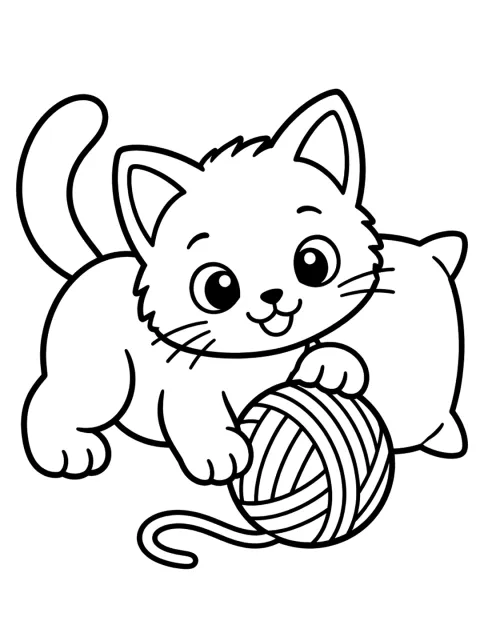
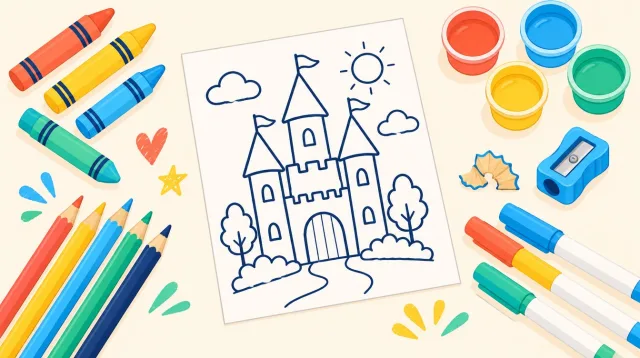
Daily coloring is one of the best ways to improve pencil grip because it combines fun and practice. Start with big simple pictures like the little kitten, then move to more detail like the dream castle. Our guide to coloring pages by age helps you choose.
Tips for parents
- Do not force a specific grip before age four.
- Correct gently and lead by example.
- Keep practice short and fun.
- Praise every small improvement.
Frequently asked questions
Should I make my left-handed child use the right hand?
No. Left-handedness is completely normal, and forcing a switch can cause frustration. Just tilt the paper slightly to the right and seat your child where their elbow is free.
Are plastic pencil grips helpful?
They can help some older children, but most kids do not need them. Start with short crayons and strengthening play, and use grips only if a specialist suggests them.
Pencil grip grows with time. Start today with a short coloring session, online or with a free printable page in A4 or Letter size.