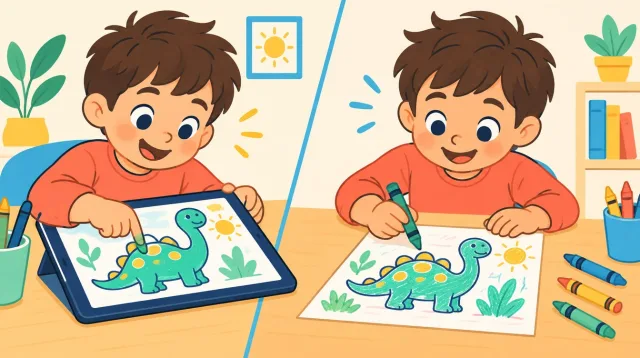
Coloring inside the lines is one of the skills parents ask about most, especially before school. The good news is that it does not require pressure or boring repetition, just the right progression and fun exercises. Remember that going outside the lines before age four is completely normal, because small hand muscles and hand and eye coordination are still developing. Here are eight practical exercises you can use at home.
Why do kids go outside the lines?
There are usually three reasons: finger muscles are not strong yet, the child holds the crayon in an uncomfortable way, or the picture has details that are too small for their age. Knowing the reason helps you choose the right exercise instead of repeating "stay inside the lines".
1. Start with thick outlines and big areas
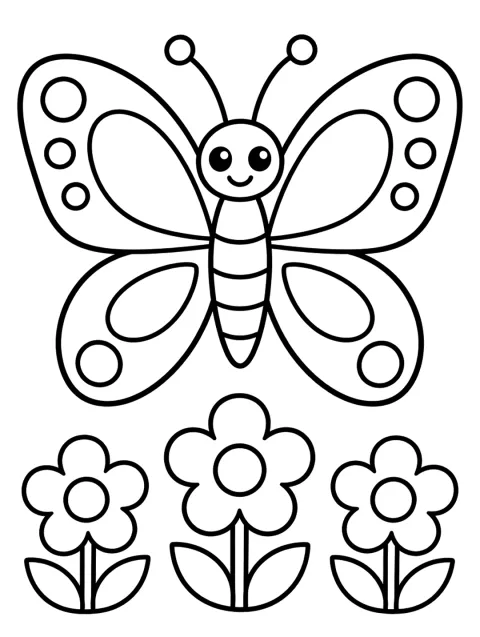
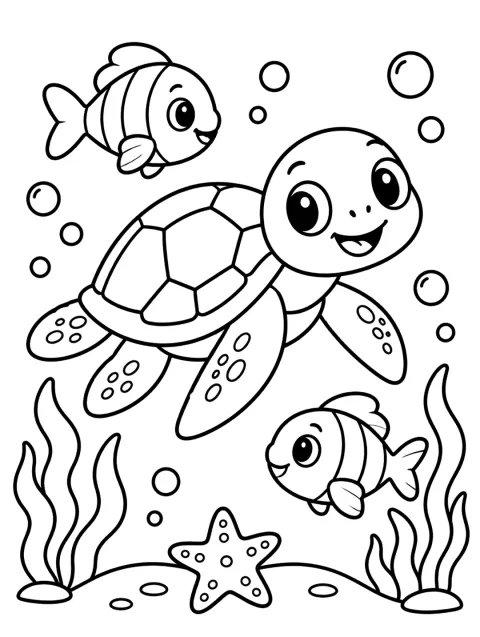
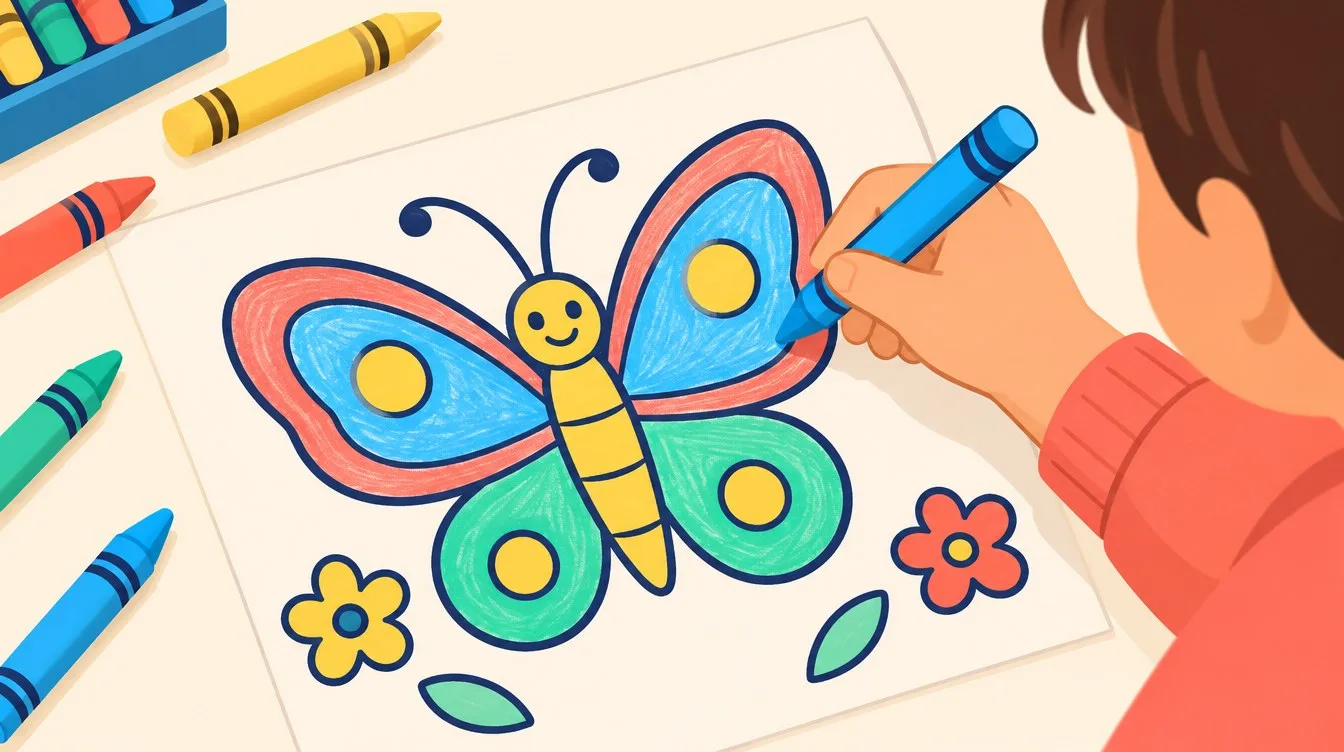
The easiest way to teach coloring inside the lines is clear borders and wide spaces. Thick outlines act as a visual wall. Try our butterfly page with its big wings, or the sea turtle with large shell sections.
2. Color the edges first, then fill the middle
Teach your child to slowly trace the inside edge of a shape first, like building a little fence, then fill the middle freely. Adults use this trick too, and it works because the child only needs precision on a small part.
3. Build hand strength every day
Pencil control depends on finger strength. Squeezing playdough, picking up cereal with the fingers, tearing paper and placing stickers all strengthen fine motor muscles without feeling like practice.
4. Use short, chunky crayons
Short or broken crayons encourage a fingertip grip instead of a fist, which gives better control. See our guide to the correct pencil grip.
5. Color on a slanted surface
Place the paper on a slightly tilted surface, like a large binder. This puts the wrist at a comfortable angle and improves control, a tip often recommended by occupational therapists.
6. Mazes and dot tracing
Simple mazes and dotted lines train direction control and stopping at borders. Make it a game: help the bunny reach the carrot without touching the wall.
7. Start on screen, then move to paper
Tap-to-fill coloring teaches that each closed area gets its own color, without the frustration of going outside. Then move the challenge to paper. Try coloring the turtle online, then print the same page.
8. Praise effort, avoid criticism
Children who are criticized often may stop enjoying coloring. Praise what went well, and coloring inside the lines will slowly become a habit.
How long does it take?
Most children color inside the lines well between ages five and six, with a few minutes of regular practice a day. Consistency matters more than session length.
Frequently asked questions
Should I correct my child every time they go outside the lines?
No. Constant correction turns coloring into a chore. Offer the right exercises and praise small improvements, and control will grow as the hand muscles develop.
My child presses so hard the crayon breaks. What helps?
Try chunky crayons and place a thin foam sheet under the paper so your child feels when pressing too hard. Encourage gentle coloring, "like petting a kitten".
Start today with our simple nature coloring pages, colored online or printed free in A4 or Letter size.